
Global account marketplace searches usually come from one place: you need an account fast, you see listings everywhere, and you’re not sure what’s legit versus what’s a trap. The safest path is rarely “find the cheapest seller,” it’s building a repeatable process that screens the listing, the seller, and the transfer method before money moves.
This topic matters because account trading can collide with platform rules, identity risk, chargebacks, and even stolen credentials. Many deals fail not because people are careless, but because they skip the boring checks: ownership proof, recovery access, payment protection, and clean transfer paperwork.
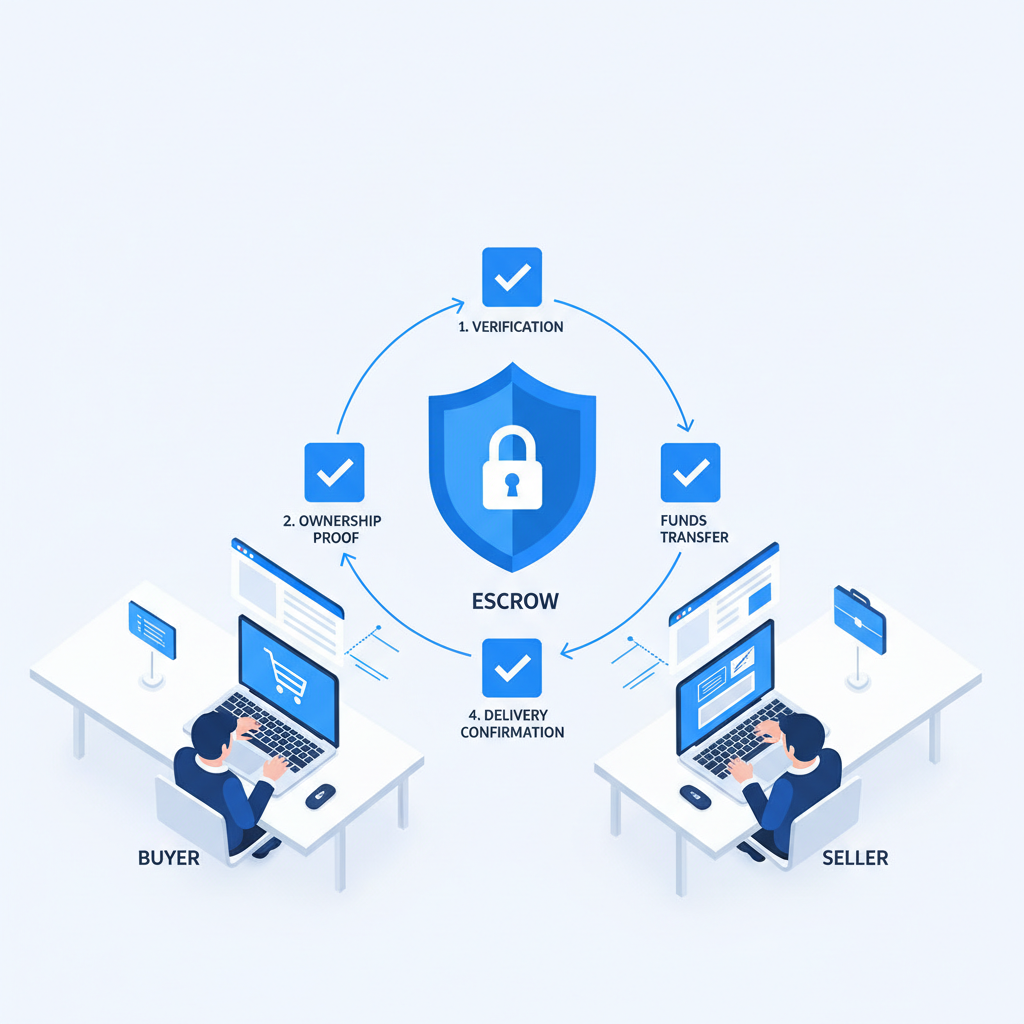
Below is a practical guide to evaluate a global account trading platform, pick a secure global account escrow option, and avoid common mistakes when you buy verified global accounts or sell them to US buyers. I’ll keep it operational, because that’s what people actually need when money and access are on the line.
Quick reality check: legality, platform policies, and what “safe” can mean
In many cases, the biggest risk in a global account marketplace is not technical, it’s policy. A lot of platforms prohibit selling or transferring accounts in their Terms of Service, and enforcement varies by product and timing. “Safe” often means you reduce fraud and security exposure, not that you eliminate policy risk.
According to the Federal Trade Commission (FTC) consumer guidance, common fraud patterns include impersonation, stolen credentials, and payment reversals, so any deal structure should assume someone may try to unwind the transaction after access changes.
- Policy risk: the account may be reclaimed or banned if transfer violates platform rules.
- Security risk: malware, session hijacking, or recovery methods still tied to the seller.
- Financial risk: chargebacks, counterfeit “verification,” or fake escrow pages.
If you’re buying for business use, consider whether an official, newly created account plus compliant growth work is more sustainable. If you still proceed, treat this as a controlled-risk transaction, not a casual purchase.
Where deals go wrong in an international account marketplace (USA perspective)
For US buyers using an international account marketplace USA listing, failures often cluster around a few predictable weak points. The seller may be overseas, time zones slow verification, and “proof” gets interpreted differently across markets.
Common failure points
- Recovery access not fully transferred: old email, phone, authenticator, or backup codes remain with the seller.
- Account history mismatch: “premium aged global accounts” claims, but activity logs show sudden spikes, automation, or suspicious geo jumps.
- Verification confusion: “verified” might mean email-verified, KYC-verified, or business-verified, each has different value and risk.
- Payment protection gaps: buyer pays via method with weak dispute rules, or escrow is fake.
- Resale chain opacity: a “global account seller directory” entry is a broker, not the owner, which complicates proof.
Say it plainly: if you can’t map who created the account, who controlled it last week, and who controls recovery today, you’re buying uncertainty.
Before you buy: a fast screening checklist that catches most bad listings
When you buy verified global accounts, the first pass should be ruthless. It saves time and reduces the temptation to “make it work” after you already paid. Use this as a 15-minute filter before any negotiation.

- Ownership proof: can the seller show creation email domain history, earliest invoices/receipts, or admin screenshots that match the account ID?
- Recovery control: will you receive the original email inbox or a fully transferred recovery method you control immediately?
- 2FA plan: confirm how 2FA will be reset, and whether backup codes exist and will be handed over.
- Location and device history: look for sudden logins from unrelated regions or “impossible travel” patterns.
- Reason for sale: vague answers are common, but contradictions are a red flag.
- Cooling-off window: reputable sellers accept an inspection window inside escrow terms.
If any one of these is “trust me,” pause. In account trading, trust without artifacts usually means you’re subsidizing someone else’s risk.
How to vet sellers on a global account trading platform (and off-platform signals)
Most buyers focus on the listing, but the seller is the real product. A seller may show up in a global account seller directory with a lot of inventory, yet still fail basic accountability checks.
Signals that tend to correlate with fewer surprises
- Traceable business identity: consistent company name, verifiable website, and stable support channels.
- Clear inventory sourcing: they can explain whether accounts are first-party created, client offboarding, or reseller acquired.
- Documented transfer SOP: a written handover process beats “we’ll walk you through it on chat.”
- Escrow-first posture: they push for escrow rather than direct crypto or wire.
Signals that often indicate elevated risk
- Pressure tactics, countdown discounts, or refusal to use escrow
- Inconsistent story about account age, region, or verification type
- Too many “bulk” listings with identical screenshots
For wholesale global accounts suppliers, the bar should be even higher, because bulk inventory magnifies any hidden problem. One compromised batch can waste weeks.
Escrow and payment safety: what “secure” looks like in practice
A secure global account escrow setup does two things: it prevents the seller from taking money without transfer, and it prevents the buyer from receiving access then reversing payment unfairly. The details matter, especially the inspection steps and what counts as “successful transfer.”
| Protection element | What to require | Why it matters |
|---|---|---|
| Identity verification | Verified profiles, consistent business info, audit trail | Reduces impersonation and fake escrow pages |
| Inspection window | Time to confirm recovery access, 2FA, and login stability | Catches reclaim attempts before release |
| Clear success criteria | Defined transfer checklist signed by both sides | Avoids “worked for me” disputes |
| Dispute process | Document upload, timestamps, decision policy | Prevents endless back-and-forth |
According to the FBI Internet Crime Complaint Center (IC3), online transaction fraud frequently relies on moving victims off trusted channels, so treat “let’s finalize on Telegram” as a risk multiplier unless you have a strong contractual relationship.
Buying scenarios: single premium account vs bulk global account purchasing
Not every buyer should use the same playbook. A one-off purchase of premium aged global accounts needs deeper history verification, while bulk global account purchasing needs sampling, batch controls, and rollback plans.
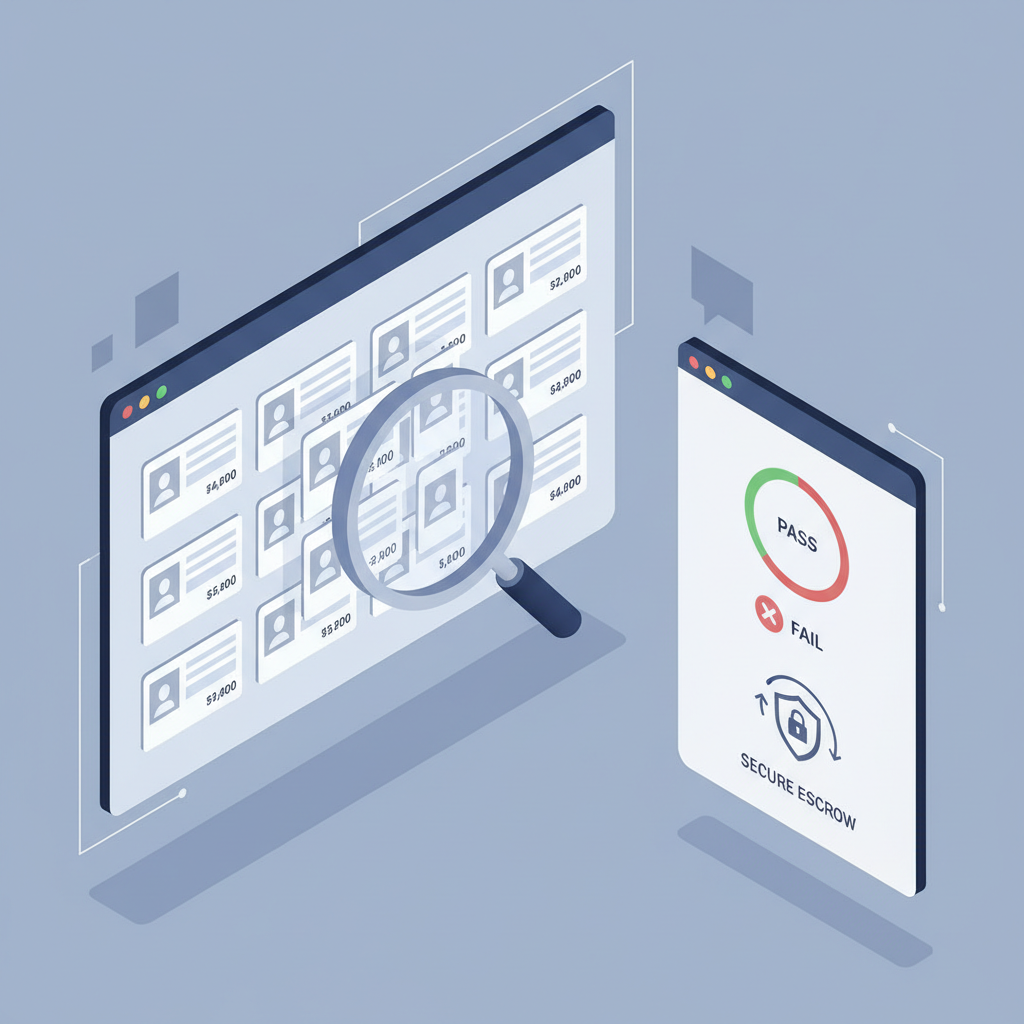
If you’re buying a single higher-value account
- Ask for a short live walkthrough: login, security settings, recovery options, and recent activity.
- Require transfer of the recovery email inbox or an equivalent recovery method you fully own.
- Hold funds in escrow until you can change password, rotate 2FA, and confirm sessions are logged out elsewhere.
If you’re buying in bulk
- Start with a pilot batch: sample 5–10% (or a fixed small number) and validate thoroughly.
- Define batch acceptance rules: what defect rate triggers refund or replacement.
- Track identifiers: maintain a ledger of account IDs, transfer timestamps, and recovery assets.
- Stagger activation: avoid logging in to 100 accounts from one US IP on day one.
If a seller offers a global account reseller program, don’t treat it as a shortcut to margin. Ask what happens when an account is reclaimed, how replacements are handled, and who carries loss during disputes.
Hands-on transfer steps that reduce reclaim risk
Most “account got pulled back” stories involve incomplete handover. Even a trusted cross-border account exchange can’t protect you if recovery stays with the previous controller.
- Change password immediately and log out all sessions, if the platform allows it.
- Replace recovery email/phone with assets you control, not a throwaway you can’t secure.
- Reset 2FA, generate new backup codes, store them securely.
- Check authorized apps and revoke anything unfamiliar.
- Document everything: screenshots, timestamps, escrow chat logs, and the final transfer checklist.
In many cases, a short “stabilization period” helps: keep changes minimal for a day or two, then gradually update profile details, payment methods, or business settings. Sudden changes sometimes trigger security flags.
Common myths and mistakes (and what to do instead)
- Myth: “Verified” means safe. Reality: verification type matters, and it can be faked or become a liability if tied to someone else.
- Myth: escrow solves everything. Reality: escrow only works if success criteria include recovery control, not just login access.
- Myth: older always equals better. Reality: aged accounts with unnatural activity can be higher risk than new ones.
- Mistake: paying outside the platform to “save fees.” Better move: treat fees as insurance against the most expensive failure modes.
If you feel yourself rationalizing a red flag because the price is good, that’s usually the moment to stop and re-check the basics.
When to pause and seek professional help
If the transaction touches identity documents, business verification, regulated industries, or significant dollar amounts, it may be worth consulting a qualified attorney or compliance professional. That’s especially true if you’re operating in a corporate environment with procurement rules.
Also consider expert help if you suspect compromised credentials, phishing, or malware exposure during transfer. According to the Cybersecurity and Infrastructure Security Agency (CISA), strong account hygiene includes multi-factor authentication and secure password practices, and a professional can help you audit what’s been changed beyond the obvious settings.
Conclusion: a safer way to use a global account marketplace
A global account marketplace can work when you treat it like a controlled transaction: validate the seller, define what “delivered” means, keep money in escrow until recovery control transfers, and document the handover. The goal isn’t perfection, it’s fewer irreversible mistakes.
If you only do two things this week, make it these: build a one-page transfer checklist you refuse to skip, and run a small pilot before any bulk order.
Key takeaways
- Seller quality beats listing quality, especially for cross-border deals.
- Recovery control is the real asset, not just a working login.
- Escrow needs success criteria, or it becomes a false sense of safety.
FAQ
What should I check first in a global account marketplace listing?
Start with ownership proof and recovery control. If the seller can’t show credible history or won’t transfer recovery methods, the rest of the conversation usually wastes time.
Are “premium aged global accounts” always lower risk?
Not necessarily. Age can help in some ecosystems, but unnatural activity patterns or repeated ownership changes can increase enforcement or reclaim risk.
How do I evaluate a global account trading platform quickly?
Look for identity verification, clear escrow terms, an auditable dispute process, and rules that discourage off-platform payments. Weak governance often shows up as vague enforcement.
What does “buy verified global accounts” typically mean?
It varies by platform. Sometimes it’s email/phone verified, sometimes it’s KYC or business verification. Ask the seller to define verification type and confirm what transfers to you.
Is bulk global account purchasing worth it for US businesses?
It can be, but only with batch controls, sampling, and a clear replacement policy. Without those, small defect rates become large operational problems.
How can I spot a reliable wholesale global accounts supplier?
They usually have consistent business identity, a transparent sourcing explanation, and a documented transfer SOP. If everything depends on private chat promises, consider that a warning.
What should a trusted cross-border account exchange include?
At minimum: escrow with inspection time, defined delivery criteria, and a dispute mechanism that requires evidence. Cross-border adds complexity, so structure matters more than speed.
When should I walk away even if the price is great?
If the seller refuses escrow, won’t transfer recovery access, or pressures you to move fast. Those three behaviors tend to correlate with the most costly outcomes.
If you’re trying to choose a marketplace, compare sellers, or set up escrow terms without spending days on back-and-forth, a simple checklist and a standardized handover script can make the process much more predictable, and it often pays for itself on the first deal you don’t regret.